Press kit
Everything here is free to use in coverage. Questions go to hello@fightingfruit.com.
Fact sheet
- Title
- Fighting Fruit in your own Backyard
- Developer
- Overripe Games
- Platforms
- Windows, macOS
- Players
- 1 to 4 players, couch or online co-op
- Engine
- Godot 4
- Status
- In development — No release date yet
Description
One line. Scout by day. Hold the yard by night.
Short. You get 120 seconds of daylight to raid your own backyard. Take what you find, run it home, and hold the house when the fruit come after dark. One to four players.
Long. Every day in Fighting Fruit is a 120-second raid on your own backyard, and every night is the bill. Towers are bought with sugar, but how many you may place depends on what you found while the sun was up, so a quiet day is a short-handed night. After dark the yard shrinks to a lit ring around the house, the dark beyond it burns, and the fruit arrive from more directions each night. Nothing they break is destroyed — sheds and towers go dark, and you walk out the next morning and put them back yourself. One to four players, in any mix of couch and online.
Assets
Logos and high-resolution screenshots go up here. Ask by email in the meantime.
Features
- The day is a timer. Daylight lasts 120 seconds. Everything you will have tonight is whatever you can find, kill and carry home before it runs out.
- What you found is what you can build. Sugar buys towers. How many you may place is set by what you dug up that afternoon, so a quiet day is a short-handed night.
- The dark is the wall. No fences, no chokepoints. The yard shrinks to a lit ring around the house, the dark past it burns, and where you can stand is the whole level.
- Four players, one yard. One couch, online, or both at once. Candy is gathered together and spent apart, so nobody waits on the host to buy their build.
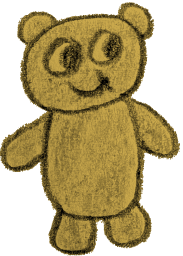
- Drawn in coloured pencil. Every surface is pigment on paper — a real tooth, real stroke direction, and value that comes from layering rather than from a darker fill.
- A trinket pool with rules. Unique stat sets, a downside budget, and effects that only appear in shared families, so two runs of the same character do not converge.